





Misha Learns AI
Five hard ideas about AI, explained to a nine-year-old — and to the grown-up reading over her shoulder. Free, no signup, about ninety seconds each.

Five characters, and what each one really is
Every episode uses the same cast. Learn these five and you have the actual anatomy of an AI assistant.
- Mishathe child asking the questions
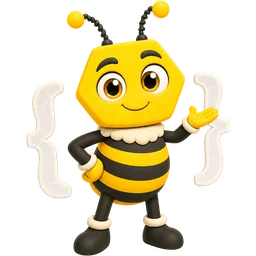
- Buzzythe app you open
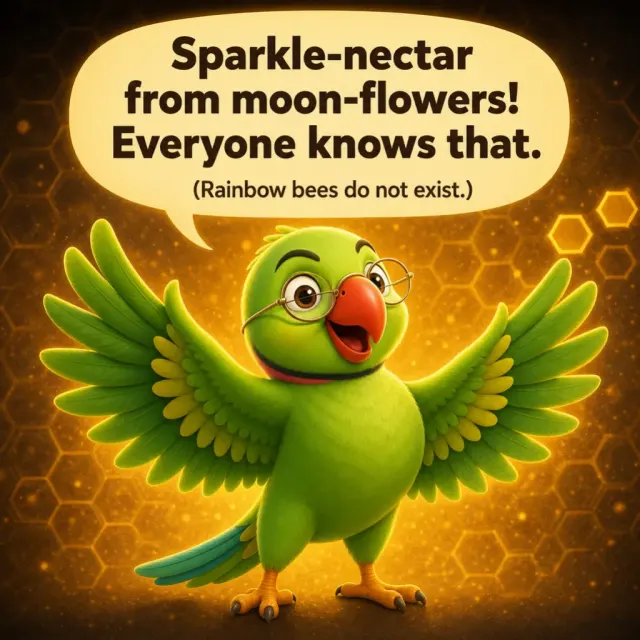
- Mithuthe model that actually thinks
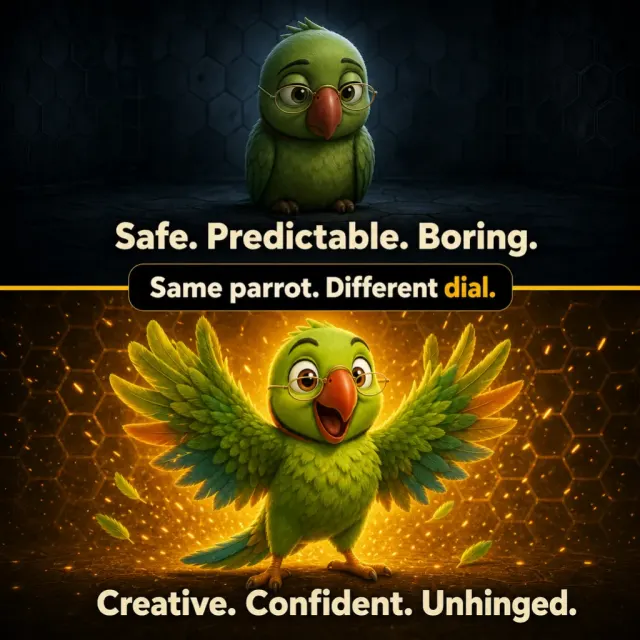
- Jugnuthe temperature dial
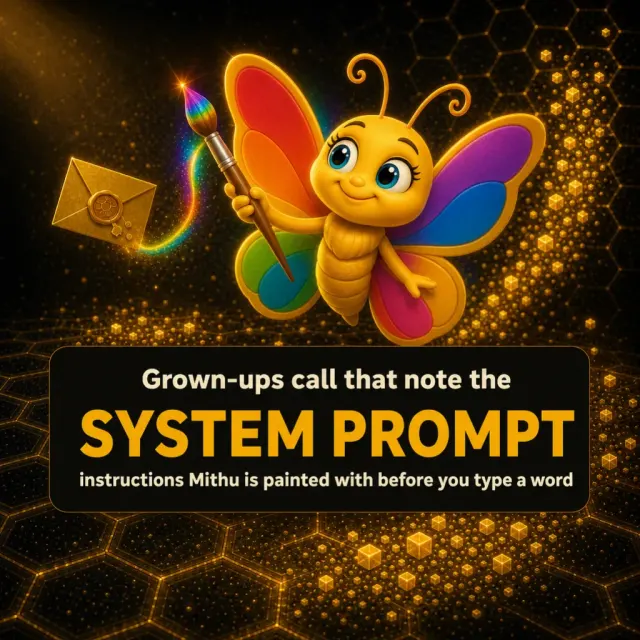
- Titlithe system prompt, painted on before you arrive
Episode 1 · Prompt
What is a prompt in AI?
A prompt is simply what you ask an AI to do. The catch is that an AI will not fill in the parts you left out — ask it for “food” and it has no idea whether you meant a snack or a banquet. Children learn this faster than adults do, because the failure is funny rather than abstract: say too little and you get an avalanche. A good prompt says what you want, how much, and what to leave out.

Read all 10 slides≈ 510 KB
Or watch the 60-second version
Episode 2 · Hallucination
Why does AI make things up?
An AI hallucination is a confident answer that simply is not true. It happens because a language model is built to guess the next word, not to look facts up — so when it has never seen the answer, guessing still produces something that sounds right. It is not lying; it has no sense that it has crossed from knowing into inventing. The habit worth teaching a child is small and durable: ask how it knows, and treat “I don't know” as a real answer.

Read all 14 slides≈ 590 KB
Or watch the 60-second version
Manisha teaches this exact habit — asking an AI how it knows — in the free demo class. Book a free demo →
Episode 3 · Tokens & temperature
Why does AI answer differently every time?
An AI does not read words — it reads tokens, which are word-fragments. “Unbelievable” is not one thing to a model but three pieces. Temperature is a separate dial, usually from 0 to 1, that decides how adventurously the model picks its next piece: turn it down and answers get flat and repetitive, turn it up and they get strange. Higher temperature is not more intelligence. It is more willingness to take a risk.

Read all 15 slides≈ 730 KB
Or watch the 60-second version
Episode 4 · Context window
Why does AI forget what I told it earlier?
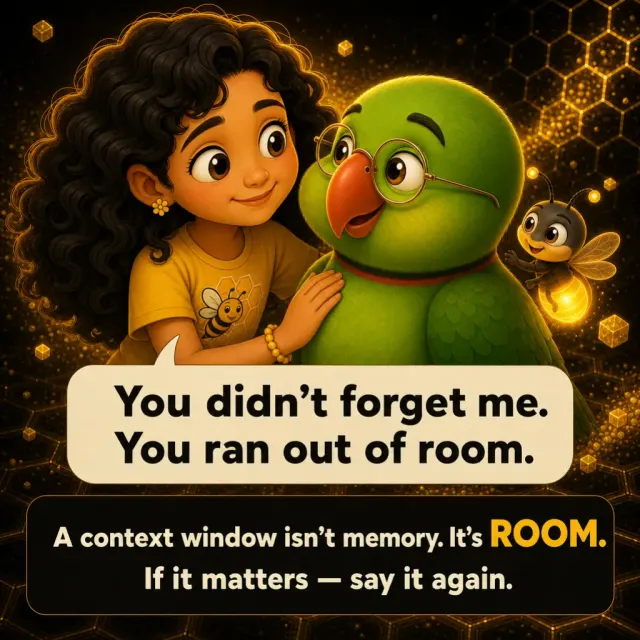
Everything you have said in a conversation sits in the model's context window — a fixed amount of room, not a memory. When the conversation grows past it, the oldest things you said fall out, including instructions you gave at the very start. The AI is not ignoring you and it is not making things up; it genuinely no longer holds what you told it. If a rule matters, say it again, or start a fresh chat with clean space.

Read all 14 slides≈ 790 KB
Your child can try all of this on a real model in 45 minutes, with our founder on the call. Book a free demo →
Episode 5 · System prompt
What is a system prompt?
Before you type a single word, most AI assistants have already been given hidden instructions about who to be and how to answer. That is the system prompt, and it is why the same underlying model can feel like a strict tutor in one app and a playful helper in another. It is not the AI's personality — it is a costume somebody else chose for it. You can ask what it was told; it will read you the costume, but not who picked it.

Read all 18 slides≈ 1.0 MB
That’s the whole cast.
Buzzy, Mithu, Jugnu and Titli are how a nine-year-old ends up explaining a system prompt at the dinner table.
- Misha
- Buzzy
- Mithu
- Jugnu
- Titli
Your child laughed at a parrot. Now let them talk to one.
A free 45-minute class with Manisha, our founder — she takes every demo herself and replies on WhatsApp with slots for your timezone. Nothing charged, nothing to install.